

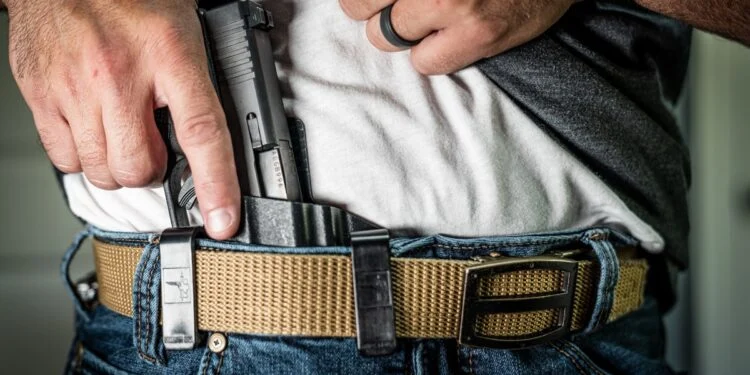
Holsters are more than just a convenient way to carry a firearm; they are a critical safety device, playing a pivotal role in preventing accidental discharges. While responsible gun ownership encompasses thorough training, proper handling, and adherence to safety rules, a well-designed and correctly used concealed carry holster acts as a crucial last line of defense, mitigating the risks associated with carrying a loaded weapon. Understanding the multifaceted functions of a holster in maintaining firearm safety is paramount for every gun owner.
The Primary Mission: Secure Retention
The most basic function of a holster in stopping inadvertent discharges is safe retention. A good holster holds the firearm firmly in place, preventing it from falling out, shifting, or being inadvertently manipulated.
Preventing Drops and Bumps
An unsecured firearm is an incredibly dangerous one. If a firearm slips out of a pocket, waistband, or an ill-fitting holster, the impact with the ground or any hard surface can, under specific circumstances, lead to an unintended discharge. Modern firearms are designed with safety features to prevent this, but no mechanism is entirely foolproof, especially with significant impacts. A holster’s primary design ensures that the firearm remains safely within its confines, even during vigorous activity, running, or sudden movements.
Maintaining Proper Orientation
Beyond simply holding the firearm, a quality holster maintains its correct orientation, ensuring the muzzle is pointed in a safe direction (typically downwards or away from the body) even when carried. An unsecured firearm can shift, causing the muzzle to point in an unsafe direction, potentially towards the carrier’s own body or bystanders. The rigidity and form-fitting nature of a good holster prevent this dangerous reorientation.
Protecting the Trigger Guard: The Non-Negotiable Barrier
A holster’s whole and uncompromising coverage of the trigger guard is maybe the most important way it prevents accidental discharges. This is a non-negotiable safety feature that every responsible holster must possess.
Material Rigidity and Form-Fitting Design
The effectiveness of trigger guard coverage depends heavily on the holster’s material and how it’s molded.
- Kydex/Molded Polymer: These materials are rigid and can be precisely molded to the contours of a specific firearm. This ensures complete and consistent trigger guard coverage that won’t collapse or deform under pressure.
- Quality Leather Holsters: While more pliable, well-made leather holsters are reinforced around the trigger guard area to prevent collapsing and maintain their protective shape. Avoid flimsy, generic leather holsters that may allow the trigger guard to be exposed or become soft over time.
Enhancing Accessibility and Draw Consistency (Safely)
While safety is paramount, a good holster also facilitates safe and efficient access to the firearm when needed. This seemingly contradictory role is achieved through thoughtful design.
Consistent Draw Stroke
A well-made holster lets a draw stroke be constant, smooth, and predictable. This consistency reduces fumbling and unnecessary movements that could lead to an accidental discharge. The firearm should present itself in the same orientation every time, allowing the user to establish a proper grip before the firearm is fully drawn.
Hand Positioning and Thumb Break
Holsters often incorporate features that guide the shooter’s hand to a safe and effective grip before drawing the firearm.
- Clearance for a Full Grip: The holster should allow the shooter to obtain a full, firing grip on the firearm while it’s still holstered. This prevents the need to adjust the grip once the firearm is out, reducing the chances of fingers entering the trigger guard prematurely.
- Thumb Break/Retention Devices: While often for security against disarming, these features also guide the thumb during the draw, ensuring fingers are kept clear of the trigger until the firearm is out of the holster and pointed downrange.
Conclusion
The holster’s role in preventing accidental discharges is multifaceted and indispensable. From providing secure retention against drops and unwanted movement to, most critically, creating an impenetrable barrier around the trigger guard, a quality holster is a cornerstone of safe firearm carry. However, its effectiveness is intrinsically linked to responsible user behavior. By understanding the design principles that contribute to holster safety and by diligently adhering to fundamental firearm safety rules, gun owners can significantly minimize the risk of accidental discharges, ensuring that their firearm remains a tool for protection, not a source of danger. Choosing the right holster and using it correctly are not just recommendations; they are essential practices for any responsible armed citizen.